



Having a Shopify store is a great way to start and grow an online business, but simply launching your store does not guarantee that customers will find it. With thousands of online stores competing for the same customers, Shopify SEO is essential for improving your visibility on Google and attracting organic traffic.
Shopify SEO involves optimizing your Shopify store’s content, product pages, collections, technical structure, images, and overall user experience so search engines can better understand your website. When your store is optimized around relevant search queries and customer intent, you can increase your chances of appearing in organic search results and reaching potential buyers.
In this guide, you will learn how to optimize your Shopify store for Google and build a stronger foundation for long-term organic growth.
What Is Shopify SEO?
Shopify SEO is the process of optimizing a Shopify ecommerce website to improve its visibility in search engines such as Google.
It includes several areas of optimization, including:
- Keyword research
- Product page optimization
- Collection page optimization
- Meta titles and descriptions
- URL optimization
- Image SEO and alt text
- Internal linking
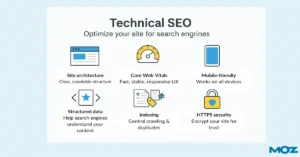
- Technical SEO
- Site speed and mobile experience
- Content marketing
- Backlink building
Shopify already provides several built-in SEO features, including automatically generated sitemaps, robots.txt files, canonical tags, and SSL. However, store owners still need to optimize important content and SEO settings manually.
Why Is Shopify SEO Important?
People frequently use Google when they are looking for products, comparing options, or researching brands before making a purchase. Appearing in relevant search results can help your Shopify store reach people who are already interested in what you sell.
Unlike paid advertising, organic search traffic does not require you to pay for every individual click. However, SEO requires consistent optimization, useful content, and time to build authority.
A strong Shopify store SEO strategy can help you:
- Increase organic website traffic
- Improve product visibility
- Reach potential customers
- Generate more qualified visitors
- Build brand visibility
- Support long-term ecommerce growth
- Reduce dependence on paid traffic
The goal should not simply be to rank for one keyword. Your store should provide useful, relevant pages that match what your potential customers are actually searching for.
1. Start With Shopify Keyword Research
Keyword research is one of the first steps in an effective Shopify SEO strategy.
Before optimizing your products or collections, identify the phrases your potential customers use when searching for your products.
For example, if you sell handmade skincare products, your potential keywords might include:
- Natural skincare products
- Organic face cream
- Handmade soap
- Natural moisturizer
- Best skincare products for dry skin
Focus on keywords that are relevant to your products and business. You can also target long-tail keywords because they are often more specific and can reflect clearer search intent.
Avoid adding keywords randomly throughout your website. Shopify recommends using keywords naturally in readable content rather than forcing them into sentences.
2. Optimize Your Shopify Product Pages
Product pages are among the most important pages on an ecommerce website.
Each product page should clearly explain what the product is, who it is for, its main benefits, features, specifications, and other information customers need before buying.
For effective Shopify SEO optimization, review the following elements:
Product Title
Create a clear and descriptive product title that naturally includes the main keyword where appropriate.
Instead of:
Product 123
Use something more descriptive, such as:
Organic Aloe Vera Face Moisturizer
Product Description
Write original product descriptions instead of copying descriptions from manufacturers or other websites.
Explain:
- Product benefits
- Key features
- Materials or ingredients
- Size or specifications
- Usage instructions
- Frequently asked questions
Helpful product content can make the page more useful to both shoppers and search engines.
Product Images
Use high-quality images while keeping file sizes optimized. Add descriptive alt text to help explain the image content.
For example:
“Organic aloe vera face moisturizer for dry skin”
Shopify allows store owners to customize image alt text as part of their SEO settings.
3. Optimize Collection Pages
Many Shopify store owners focus heavily on product pages and ignore collection pages.
Collection pages can target broader commercial search terms and help organize your ecommerce website.
For example, instead of only creating individual product pages for a clothing store, you could have collections such as:
- Women’s Casual Dresses
- Men’s Formal Shirts
- Summer Clothing
- Cotton T-Shirts
Create descriptive collection titles and useful introductory content where appropriate. This helps users understand the collection and gives search engines additional context.
A logical ecommerce structure generally moves from the homepage to collections and then to individual products.
4. Write SEO-Friendly Meta Titles and Descriptions
Meta titles and meta descriptions provide search engines and users with information about your page.
Your title should be unique, descriptive, and relevant to the page’s main keyword.
For example:
Organic Skincare Products | Natural Face Care
A meta description could explain the main value of the page:
Shop natural skincare products made with quality ingredients. Explore organic face creams, moisturizers, and more.
Shopify recommends creating unique titles and descriptions and using important keywords naturally.
5. Create a Clear Shopify Site Structure
A well-organized website makes it easier for visitors and search engines to navigate your store.
Your Shopify store should have a logical structure such as:
Homepage → Collections → Products
Use clear navigation menus and descriptive links. Avoid making important pages difficult to reach.
Internal links can also connect related pages. For example, a blog post about skincare could link to a relevant skincare collection, while a product page could link to related products.
A logical structure and descriptive internal links can help search engines understand the relationship between different pages on your store.
6. Make Your Shopify Store Mobile-Friendly
A large number of shoppers browse ecommerce websites through smartphones, so your store needs to work properly on mobile devices.
Check that:
- Text is easy to read
- Buttons are easy to tap
- Images display correctly
- Navigation is simple
- Product information is accessible
- Checkout works smoothly
A good mobile experience is important not only for SEO but also for converting visitors into customers.
7. Improve Shopify Store Speed
Website performance can affect the user experience and should be part of your Shopify ecommerce SEO strategy.
Large images, unnecessary apps, excessive scripts, and poorly optimized themes can contribute to slower pages.
Review your store regularly and remove unnecessary elements that may affect performance.
Focus especially on important pages such as:
- Homepage
- Collection pages
- Product pages
- Cart
- Checkout-related experiences
Fast, usable pages can provide a better experience for shoppers while supporting your overall technical SEO efforts.
8. Submit Your Shopify Sitemap to Google
Shopify automatically generates a sitemap for your store. The sitemap contains URLs for important ecommerce content such as products, collections, pages, and blog posts.
You can connect your website with Google Search Console and submit your sitemap so Google can discover your store’s URLs.
This does not guarantee that every page will rank or be indexed, but it helps Google discover and crawl your website.
You should also monitor Google Search Console for indexing problems, search queries, clicks, impressions, and other useful SEO information.
9. Create Helpful Content Around Your Products
A Shopify store should not only contain product pages.
Creating useful blog content can help you target informational searches related to your products.
For example, a skincare store could publish:
- How to Build a Simple Skincare Routine
- Best Ingredients for Dry Skin
- How to Choose a Face Moisturizer
- Benefits of Natural Skincare
These articles can attract users earlier in the buying journey and internally link to relevant products or collections.
Google’s ecommerce guidance emphasizes helping search engines understand ecommerce content, site structure, and product information.
10. Build Quality Backlinks
Backlinks are links from other websites to your Shopify store.
When reputable and relevant websites mention and link to your business, they can contribute to your website’s authority.
Instead of trying to collect a large number of low-quality links, focus on earning relevant mentions through:
- Industry publications
- Business directories
- Guest contributions
- Product reviews
- Partnerships
- Useful original content
- Digital PR
Link building should be natural and focused on building your website’s reputation.
11. Avoid Common Shopify SEO Mistakes
Some common mistakes can limit your SEO progress.
Avoid:
- Copying product descriptions
- Stuffing keywords into content
- Using the same title for multiple pages
- Ignoring collection pages
- Uploading unnecessarily large images
- Creating confusing navigation
- Forgetting image alt text
- Publishing thin or unhelpful content
- Ignoring mobile users
- Creating unnecessary duplicate pages
SEO works best when optimization improves both search visibility and the customer experience.
How Long Does Shopify SEO Take?
There is no guaranteed timeframe for ranking a Shopify store on Google.
The results can depend on factors such as:
- Website age
- Competition
- Keyword difficulty
- Content quality
- Technical SEO
- Backlinks
- Website authority
- Search intent
- Consistency of optimization
New stores may need time to establish authority and get their important pages discovered and indexed. Shopify also notes that continuing to add relevant content and developing a content strategy can be important for long-term visibility.
Therefore, Shopify SEO should be treated as an ongoing strategy rather than a one-time task.
Conclusions
Ranking a Shopify store on Google requires more than simply adding keywords to product pages. A successful Shopify SEO strategy combines keyword research, helpful content, optimized product and collection pages, strong site structure, technical SEO, mobile usability, internal linking, and quality backlinks.
Shopify provides a strong technical foundation with several built-in SEO features, but store owners still need to optimize their content and monitor their website’s performance.
If you want to rank your Shopify store on Google, start by understanding what your customers search for, optimize your most important pages, create useful content, and consistently improve your store’s SEO.
With a well-planned Shopify SEO optimization strategy, your ecommerce store can build stronger organic visibility and attract more relevant potential customers over time.