

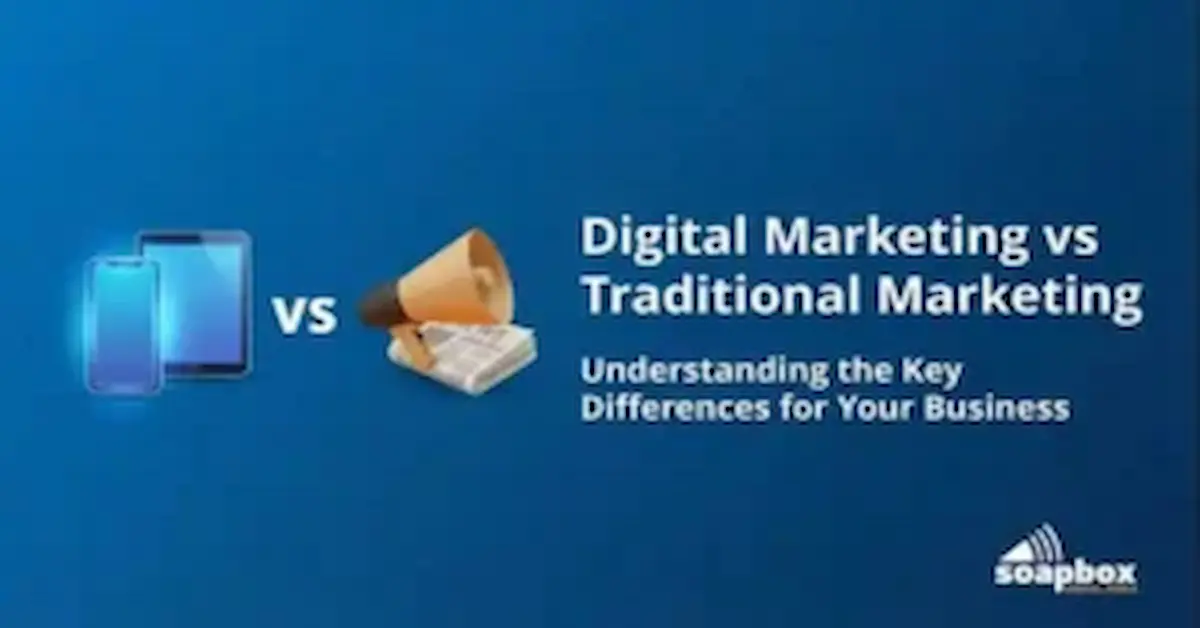
Marketing plays a major role in helping businesses reach customers and increase sales. As technology continues to evolve, companies now have more options than ever before. The debate between Digital Marketing vs Traditional Marketing is becoming increasingly important because each method has its own strengths and limitations.
Whether you own a small business, an online store, or a growing company, understanding the difference between these two marketing approaches can help you make better decisions. In this guide, we will compare Digital Marketing vs Traditional Marketing and explain which option is better for businesses in 2026.
What is Digital Marketing?
Digital marketing is the promotion of products and services through online channels such as search engines, websites, social media platforms, email, and paid advertising.
Some popular digital marketing methods include:
- Search Engine Optimization (SEO)
- Google Ads
- Social Media Marketing
- Content Marketing
- Email Marketing
- Video Marketing
- Pay-Per-Click (PPC)
Digital marketing allows businesses to reach customers wherever they spend time online.
What is Traditional Marketing?
Traditional marketing refers to offline promotional methods that have been used for many years.
Examples include:
- Newspapers
- Television advertisements
- Radio commercials
- Billboards
- Flyers and brochures
- Magazine advertisements
Although traditional marketing is still effective in some industries, it is generally more expensive and difficult to measure compared to digital marketing.
Digital Marketing vs Traditional Marketing: Key Differences
| Digital Marketing | Traditional Marketing |
|---|---|
| Online promotion | Offline promotion |
| Lower marketing costs | Higher advertising costs |
| Real-time performance tracking | Limited performance tracking |
| Highly targeted audience | Broad audience targeting |
| Quick campaign updates | Difficult to make changes |
| Better engagement with customers | Limited interaction |
The comparison between Digital Marketing vs Traditional Marketing clearly shows that digital marketing offers greater flexibility and measurable results.
Benefits of Digital Marketing
One of the biggest advantages in the Digital Marketing vs Traditional Marketing comparison is affordability.
1. Cost-Effective
Small businesses can start digital marketing with a limited budget while still reaching thousands of potential customers.
2. Better Audience Targeting
Businesses can target customers based on:
- Location
- Age
- Interests
- Online behaviour
- Search intent
This improves the quality of leads and increases conversion opportunities.
3. Measurable Results
With tools like Google Analytics and Google Search Console, businesses can monitor website traffic, clicks, conversions, and campaign performance.
4. Higher Customer Engagement
Social media platforms allow businesses to interact directly with customers through comments, messages, reviews, and live content.
5. Long-Term Growth
SEO and content marketing continue generating traffic long after content is published.
Benefits of Traditional Marketing
Although digital marketing dominates today’s market, traditional marketing still has several advantages.
Builds Local Brand Awareness
Billboards, newspapers, and local radio advertising remain useful for reaching nearby customers.
Powerful Brand Recognition
Television and print advertisements often create lasting impressions.
Trusted by Some Audiences
Older audiences may still respond better to newspapers, television, and magazines than digital platforms.
Digital Marketing vs Traditional Marketing: Which One Delivers Better ROI?
When comparing Digital Marketing vs Traditional Marketing, digital marketing usually provides a better return on investment because businesses can:
- Measure every campaign
- Optimise advertisements instantly
- Reduce unnecessary spending
- Reach highly targeted audiences
Traditional marketing often requires significant budgets without offering detailed performance insights.
Which Marketing Strategy Should Small Businesses Choose?
For most small businesses, digital marketing is the better choice because it offers:
- Affordable advertising
- Better lead generation
- Improved search visibility
- Higher customer engagement
- Easy performance tracking
- Greater flexibility
However, combining both digital and traditional marketing can be beneficial depending on your industry and target audience.
Best Practices for Successful Marketing
To achieve the best results:
- Build a professional website.
- Optimise your website for SEO.
- Publish helpful blog content regularly.
- Stay active on social media.
- Run targeted Google Ads and Meta Ads campaigns.
- Monitor campaign performance using analytics tools.
- Keep improving your strategy based on customer feedback and data.
Common Mistakes to Avoid
Businesses often make these mistakes:
- Ignoring SEO
- Having a slow website
- Not tracking marketing performance
- Posting inconsistently on social media
- Targeting the wrong audience
- Using outdated marketing methods without evaluating results
Avoiding these mistakes will improve your marketing performance over time.
Conclusion
The comparison of Digital Marketing vs Traditional Marketing shows that both approaches have their place, but digital marketing offers greater flexibility, lower costs, and measurable results. For businesses looking to grow in 2026, investing in SEO, content marketing, social media, and paid advertising provides more opportunities to reach the right audience and achieve long-term success. While traditional marketing can still support brand awareness in certain situations, a well-planned digital marketing strategy is the smarter choice for most modern businesses.