

Email marketing is one of the most effective ways for businesses to connect with customers, build trust, and increase sales. For small businesses, it provides an affordable way to promote products and services without relying entirely on paid advertising. A well-planned email marketing for small businesses strategy can help you attract new customers, maintain relationships with existing clients, and encourage repeat purchases.
Whether you run an online store, a service-based company, or a local business, email marketing allows you to communicate directly with your target audience. This guide explains how email marketing works, its benefits, the best strategies to follow, and how small businesses can achieve better marketing results.
What Is Email Marketing?
Email marketing is a digital marketing strategy that involves sending emails to subscribers and potential customers to share useful information, promote products, announce offers, or build long-term relationships.
Unlike social media platforms, where organic reach can fluctuate, email gives businesses a direct communication channel with people who have chosen to receive their messages.
Common types of marketing emails include:
- Promotional emails: Share discounts, special offers, and product launches.
- Welcome emails: Introduce your business to new subscribers.
- Newsletter emails: Deliver helpful content, company updates, and industry news.
- Follow-up emails: Reconnect with leads and encourage customers to take action.
- Abandoned cart emails: Remind online shoppers about products left in their carts.
- Re-engagement emails: Encourage inactive subscribers to interact with your brand again.
Choosing the right email type depends on your business goals and your audience’s needs.
Benefits of Email Marketing for Small Businesses
Email marketing offers several advantages for businesses working with limited budgets.
1. Cost-Effective Marketing
Small businesses often need marketing methods that deliver value without requiring a large advertising budget. Email marketing can be affordable, especially when starting with a small subscriber list and a suitable email marketing platform.
Businesses can promote new services, announce offers, and share updates without paying for every individual message delivered.
2. Builds Customer Relationships
Consistent and helpful emails keep your business connected with customers. Sharing useful tips, answering common questions, and providing relevant updates can build trust over time.
Instead of sending promotional messages constantly, focus on providing information that helps your audience make better decisions.
3. Increases Website Traffic and Sales
Email campaigns can direct subscribers to blog posts, service pages, product listings, and landing pages. Relevant calls to action encourage readers to visit your website and explore your offerings.
For example, an online store can promote a new collection, while a digital marketing agency can share a guide explaining how SEO improves website visibility.
4. Supports Customer Retention
Acquiring new customers can be expensive. Email marketing helps businesses maintain relationships with existing customers through product recommendations, helpful updates, exclusive offers, and follow-up messages.
A positive customer experience can encourage repeat purchases and referrals.
5. Helps Measure Marketing Performance
Most email marketing tools provide reporting features that help businesses understand campaign performance. You can review delivery rates, open rates, clicks, conversions, and unsubscribes to identify opportunities for improvement.
These insights help you make more informed marketing decisions.
How to Build an Email Marketing Strategy
A successful email marketing strategy starts with clear goals and a good understanding of your audience.
Step 1: Define Your Marketing Goals
Decide what you want to achieve before creating your campaign. Your goals might include generating leads, increasing online sales, promoting services, improving customer retention, or driving website traffic.
Specific goals make it easier to choose suitable email content and measure results.
Step 2: Build an Email Subscriber List
An engaged email list is essential for effective campaigns. Encourage interested visitors to subscribe through your website, newsletter forms, contact pages, or relevant lead magnets.
You can offer a useful checklist, beginner’s guide, discount, or exclusive resource in exchange for signing up.
Always obtain appropriate consent, explain what subscribers can expect, and provide a clear unsubscribe option. Avoid purchasing email lists because they may contain uninterested recipients and create deliverability and compliance problems.
Step 3: Choose an Email Marketing Platform
An email marketing platform helps you create campaigns, organize subscribers, automate messages, and monitor performance.
Popular options include:
- Mailchimp: Useful for creating email campaigns and managing subscriber lists.
- Brevo: Offers email marketing and automation features.
- MailerLite: Provides newsletter creation, forms, and automation tools.
- Klaviyo: Particularly useful for e-commerce businesses that need customer segmentation and shopping-related automation.
Compare current pricing, subscriber limits, automation features, and integration options before choosing a platform.
Step 4: Segment Your Audience
Email segmentation means dividing subscribers into groups based on relevant characteristics, interests, or behavior.
For example, a digital marketing agency could create separate groups for SEO prospects, website development leads, and existing clients. An e-commerce business could segment customers based on previous purchases or product interests.
Sending relevant content to each group can improve engagement and reduce unnecessary emails.
Step 5: Create Valuable Email Content
Your email should provide a clear benefit to the reader. Use a compelling subject line, concise paragraphs, helpful information, and one primary call to action.
For example, instead of writing “Our Services Are Available,” a digital marketing agency could use “Want More Website Traffic? Explore These SEO Tips.”
Make sure your content is accurate, easy to read, and relevant to the subscriber’s interests.
Best Email Marketing Practices for Small Businesses
Following email marketing best practices can improve campaign quality and support long-term growth.
Write Compelling Subject Lines
Your subject line influences whether someone decides to open an email. Keep it clear, relevant, and concise. Avoid misleading claims, excessive punctuation, and deceptive urgency.
Make Emails Mobile-Friendly
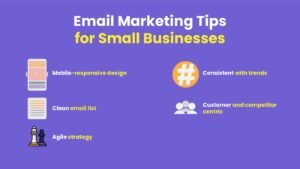
Many people read emails on smartphones. Use responsive templates, readable fonts, short paragraphs, and buttons that are easy to tap. Test your emails on different screen sizes before sending them.
Personalize Your Messages
Personalization goes beyond including a subscriber’s name. You can tailor content based on their interests, previous interactions, or stage in the customer journey.
For example, a new subscriber may need an introductory guide, while an existing customer may appreciate advanced tips or relevant product recommendations.
Maintain a Consistent Schedule
Send emails at a frequency your audience expects. A weekly newsletter or a monthly update may work well depending on your business and the value you provide.
Monitor engagement and subscriber feedback to determine whether your schedule needs adjustment.
Include a Clear Call to Action
Every email should have a purpose. Encourage readers to take one primary action, such as reading a blog, requesting a consultation, booking a service, or viewing a product.
Use descriptive button text instead of vague phrases whenever possible.
Common Email Marketing Mistakes to Avoid
Small businesses can waste time and resources by making avoidable mistakes.
- Buying email lists: Purchased contacts may not have consented to receive your messages.
- Sending too many emails: Excessive communication can lead to unsubscribes and complaints.
- Ignoring mobile users: Poor formatting makes emails difficult to read.
- Using misleading subject lines: Misleading promises damage trust.
- Failing to track results: Without measurement, it is difficult to identify what works.
- Sending generic content: Irrelevant messages can reduce engagement.
- Ignoring email deliverability: Poor list hygiene, authentication issues, and spam complaints can prevent emails from reaching inboxes.
Review campaign performance regularly and make improvements based on real data.
How to Measure Email Marketing Success
Tracking the right metrics helps you understand whether your email marketing campaigns are meeting their objectives.
Important email marketing metrics include:
- Delivery rate: The proportion of sent emails that are successfully delivered.
- Open rate: The proportion of delivered emails reported as opened, although privacy features can make this metric less reliable.
- Click-through rate: The percentage of delivered emails that generate clicks on links.
- Conversion rate: The percentage of recipients who complete a desired action, such as purchasing a product or submitting a lead form.
- Unsubscribe rate: The proportion of recipients who unsubscribe after a campaign.
- Return on investment (ROI): The financial return generated compared with campaign costs.
Use these metrics together rather than judging performance through open rates alone. Compare similar campaigns over time and focus on outcomes that support your business goals.
How Small Businesses Can Use Email Automation
Email automation allows businesses to send relevant messages automatically when specific events occur. It saves time and supports consistent communication.
Useful email automation examples include:
- Welcome sequences: Introduce your business and explain your services to new subscribers.
- Lead nurturing: Share helpful resources with potential customers who are considering your services.
- Appointment reminders: Remind clients about scheduled consultations or bookings.
- Post-purchase emails: Provide order updates, product guidance, or relevant recommendations.
- Abandoned cart reminders: Encourage shoppers to return and complete an unfinished purchase.
Start with one simple automation and improve it as you learn more about your audience.
Conclusion
Email marketing remains a valuable digital marketing channel for businesses that want to build customer relationships, generate leads, and increase sales. By developing a targeted subscriber list, creating helpful content, segmenting audiences, and measuring campaign performance, small businesses can make their marketing efforts more effective.
A successful email marketing for small businesses strategy is not simply about sending more emails. It is about delivering the right message to the right audience at the right time.
At Work N Solution, businesses can explore digital marketing strategies that support online visibility, customer engagement, and sustainable growth. Combine email marketing with SEO, website optimization, and social media marketing to create a more complete digital marketing strategy for your business.