


Introduction
Digital advertising has become one of the most effective ways for businesses to reach potential customers, generate leads, and increase sales. However, choosing the right advertising platform can be challenging, especially when comparing Google Ads and Meta Ads. Both platforms offer powerful targeting options, flexible budgets, and measurable results, but they work differently.
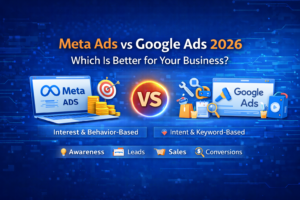
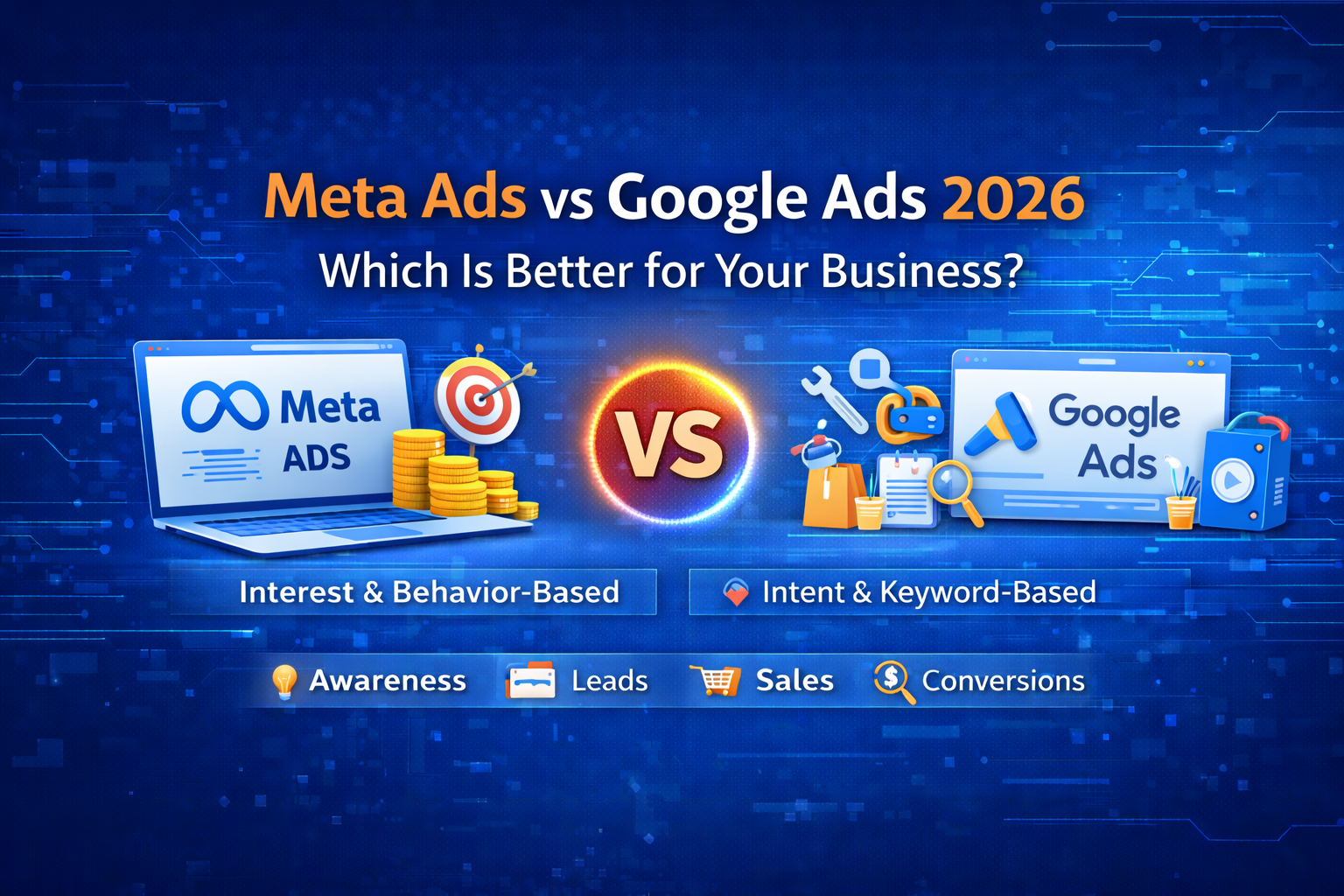
Understanding Google Ads vs Meta Ads can help businesses choose the right strategy according to their goals, target audience, and budget. Google Ads connects businesses with people actively searching for products or services, while Meta Ads helps businesses reach potential customers through platforms such as Facebook and Instagram.
In this guide, we will compare Google Ads and Meta Ads, explore their benefits, explain their differences, and help you decide which platform is better for your business.
What Are Google Ads?
Google Ads is an online advertising platform that allows businesses to display advertisements across Google Search, YouTube, Google Display Network, and other partner platforms.
One of the biggest advantages of Google Ads is its ability to target users based on their search intent. For example, when someone searches for “best digital marketing agency in Rawalpindi,” they may already be looking for professional marketing services.
Businesses can use Google Ads to appear in relevant search results and attract customers who are more likely to take action.
Benefits of Google Ads
1. Reaches Customers With High Purchase Intent
Google Ads helps businesses connect with people actively searching for specific products or services. This makes it useful for generating qualified leads and driving conversions.
2. Provides Multiple Advertising Formats
Businesses can use search ads, display ads, video ads, shopping ads, and other available campaign types depending on their objectives and eligibility.
3. Offers Measurable Results
Advertisers can monitor clicks, impressions, conversions, cost per click, and return on ad spend. These insights help businesses evaluate performance and improve their campaigns.
4. Supports Local Business Growth
Local businesses can target relevant locations and search terms to reach potential customers in specific areas. This can be especially helpful for service providers, training institutes, and local retailers.
What Are Meta Ads?
Meta Ads is an advertising platform that enables businesses to promote their products and services across Facebook, Instagram, Messenger, and other eligible placements within Meta’s advertising ecosystem.
Unlike search advertising, Meta Ads often reaches users while they are browsing social media, watching videos, or interacting with content. Businesses can use engaging visuals, videos, carousels, and other creative formats to introduce their products and services.
Meta Ads can be particularly effective for building brand awareness, generating demand, retargeting website visitors, and promoting products to relevant audiences.
Benefits of Meta Ads
1. Advanced Audience Targeting
Meta Ads offers audience targeting options based on factors such as location, interests, demographics, and available behavioral signals. Businesses can also use eligible custom audiences and lookalike audiences to reach relevant people.
2. Strong Visual Advertising
Facebook and Instagram provide opportunities to showcase products and services through attractive images, short videos, reels, and carousel advertisements.
3. Builds Brand Awareness
Meta Ads can introduce a business to people who may not be actively searching for its products or services. Repeated exposure to relevant content can help improve brand recognition.
4. Supports Retargeting
Businesses can use eligible tracking and audience tools to reconnect with previous website visitors or people who have interacted with their content, subject to platform policies and consent requirements.
Google Ads vs Meta Ads: Key Differences
Although both platforms help businesses advertise online, their main strengths differ.
1. Audience Intent
Google Ads primarily captures existing demand. Users often search for a solution when they already have a problem or want to purchase something.
Meta Ads is generally effective at creating or developing demand. Users may discover a product while scrolling through Facebook or Instagram, even if they were not planning to buy it.
Winner: Google Ads for capturing active search demand; Meta Ads for product discovery and awareness.
2. Advertising Costs
The cost of advertising on Google Ads and Meta Ads depends on the industry, competition, audience, campaign objective, ad quality, and conversion rate.
Google Ads can become expensive for highly competitive search keywords. However, a well-optimized campaign may generate valuable leads from users with strong purchase intent.
Meta Ads may offer cost-effective reach and engagement in some markets, but inexpensive clicks do not automatically translate into sales.
Winner: Neither platform is always cheaper. Compare cost per qualified lead, customer acquisition cost, and actual revenue.
3. Targeting Options
Google Ads uses search queries, keywords, locations, audiences, and other campaign signals to help advertisers reach relevant users.
Meta Ads emphasizes audience characteristics, interests, social engagement, creative content, and available conversion data.
Winner: Google Ads for keyword-based intent; Meta Ads for visual discovery and audience-based targeting.
4. Lead Generation
Google Ads can be effective for businesses offering services that people actively search for, including web development, plumbing, legal services, and digital marketing.
Meta Ads can work well for coaching programs, educational institutes, online consultations, and businesses that can communicate their value through engaging content and lead forms.
Winner: Depends on your audience and offer. Test both platforms when your budget allows.
5. E-commerce Sales
Google Shopping and relevant search campaigns can connect shoppers with products they are actively looking for.
Meta Ads can help e-commerce businesses introduce new products, demonstrate benefits, retarget interested visitors, and encourage impulse purchases.
Winner: Google Ads for capturing product-specific searches; Meta Ads for visual product discovery and remarketing. Combining both can be more effective than relying on only one.
Google Ads vs Meta Ads: Which Is Better for Small Businesses?
For small businesses, the right platform depends on the product or service, marketing objectives, and available budget.
If you run a local service business, such as a digital marketing agency or web development company, Google Ads may be a strong starting point because potential customers often search for these services directly.
For example, a business targeting “Shopify store development services” can use relevant Google Search campaigns to reach people looking for Shopify experts.
On the other hand, if you operate a clothing store, beauty brand, restaurant, or training institute, Meta Ads may help you showcase your offerings and reach relevant audiences through engaging visuals and videos.
Before investing heavily, define your primary goal, research your audience, and measure campaign performance. Start with a manageable budget and increase spending only when you have reliable performance data.
When Should You Choose Google Ads?
Google Ads may be the better option if:
- Your customers actively search for your products or services.
- You want to generate high-intent leads.
- Your business offers emergency or location-based services.
- You have clear keywords related to your offerings.
- You want to capture existing demand and measure conversions.
For example, a company offering digital marketing services in Rawalpindi can target relevant searches from people looking for SEO, website development, or paid advertising services.
When Should You Choose Meta Ads?
Meta Ads may be the better option if:
- You want to increase brand awareness.
- Your products are visually appealing.
- You want to promote offers, launches, or special events.
- Your target audience is active on Facebook and Instagram.
- You want to test creative content and reach new audiences.
For example, a digital marketing institute can use Instagram reels, student-focused creatives, and Facebook lead campaigns to promote its digital marketing training programs.
Can You Use Google Ads and Meta Ads Together?
Yes. Using both platforms can create a more comprehensive digital marketing strategy.
Google Ads can capture people actively searching for a solution, while Meta Ads can introduce your business to new audiences and help reconnect with interested prospects.
For example, an e-commerce business might use Google Shopping campaigns to reach product-focused shoppers and Meta Ads to showcase product benefits through reels and carousel advertisements.
A service business might use Google Search to generate inquiries and Meta Ads to build brand awareness or retarget eligible website visitors.
To make this approach effective, use conversion tracking, consistent messaging, and clear campaign objectives. Review each platform’s results separately and evaluate how both contribute to overall business growth.
How to Choose the Right Advertising Platform
Before choosing between Google Ads and Meta Ads, consider these important factors:
1. Define Your Goal: Decide whether you want website traffic, leads, sales, brand awareness, or app engagement.
2. Understand Your Audience: Determine what your customers search for and which online platforms they use.
3. Evaluate Your Budget: Consider the full cost of advertising, including creative production, landing pages, tracking, and campaign management.
4. Track Conversions: Measure meaningful outcomes such as qualified inquiries, purchases, and customer acquisition cost rather than focusing only on clicks.
5. Test and Optimize: Run controlled experiments, review performance regularly, and allocate more budget to campaigns that produce profitable results.
Conclusion
When comparing Google Ads vs Meta Ads, there is no single platform that is best for every business. Google Ads is particularly useful for reaching customers who are actively searching for solutions, while Meta Ads is valuable for building awareness, showcasing products, and reaching potential customers through social media.
The best choice depends on your business goals, audience, industry, and advertising budget. Some businesses may achieve strong results with one platform, while others benefit from combining both.
At Work N Solution, businesses can explore digital marketing strategies designed to improve online visibility, generate relevant leads, and support sustainable growth. Choosing the right advertising approach and tracking performance carefully can help you make better marketing decisions and get more value from your advertising budget.