



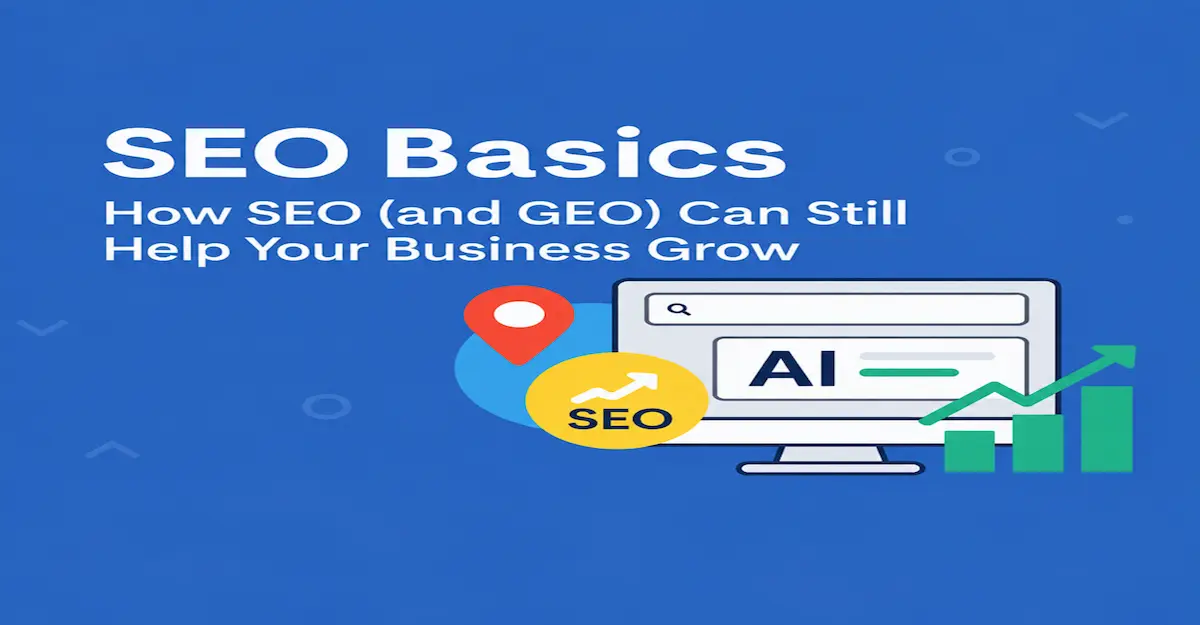
In today’s digital world, having a website is not enough to attract customers. Your business needs to be visible when potential customers search for products or services online. This is where SEO (Search Engine Optimization) plays an important role.
SEO is the process of improving a website so that it can appear higher in search engine results for relevant searches. A well-planned SEO strategy can help businesses increase organic traffic, reach the right audience, build credibility, and generate more leads without depending entirely on paid advertising.
Whether you run a small local business, an eCommerce store, a service-based company, or a growing online brand, investing in SEO can help you build a stronger and more sustainable online presence.
What Is SEO?
SEO stands for Search Engine Optimization. It involves a series of strategies and techniques used to improve a website’s visibility in search engines such as Google.
When someone searches for a product, service, or answer, search engines analyze thousands of web pages to determine which results are most relevant and useful. SEO helps your website communicate clearly with search engines while also providing a better experience for visitors.
For example, if you provide web development services in Rawalpindi and someone searches for “web development company in Rawalpindi,” effective SEO can help your website appear among the relevant search results.
Unlike paid advertising, where businesses pay for every click or impression, SEO focuses primarily on earning organic visibility through valuable content, website optimization, technical improvements, and authority building.
Why Is SEO Important for Your Business?
Most people begin their search for a product or service on a search engine. If your business does not appear on the first page for relevant searches, potential customers may never discover your website.
SEO helps bridge that gap by making your website more visible to people who are already searching for what your business offers.
Here are some major benefits of SEO:
1. Increases Organic Website Traffic
One of the biggest advantages of SEO is the ability to attract organic traffic. When your website ranks for relevant keywords, users can discover your business naturally through search results.
Organic traffic can continue generating visitors over time, especially when your website consistently publishes useful and optimized content.
2. Helps You Reach the Right Audience
SEO is not simply about bringing more visitors to your website. The goal is to attract relevant visitors who are actually interested in your products or services.
By targeting specific keywords based on customer search behavior, businesses can connect with users who are more likely to become leads or customers.
3. Builds Trust and Credibility
Websites that consistently appear in search results can create a stronger sense of credibility among potential customers.
A professional website, useful content, positive online presence, and strong search visibility can help establish your business as a reliable option in your industry.
4. Generates Long-Term Results
Paid advertising can provide immediate visibility, but that visibility generally depends on your advertising budget. SEO works differently.
A strong SEO strategy can continue bringing organic traffic after the initial optimization work has been completed. However, SEO is an ongoing process and requires regular monitoring, content updates, and improvements.
5. Supports Business Growth
More visibility can lead to more website visitors, more inquiries, and potentially more customers.
For small and medium-sized businesses, SEO can provide an opportunity to compete online with larger companies by targeting specific keywords, locations, audiences, and niches.
How Does SEO Work?
Search engines use complex algorithms to determine which pages should appear for different searches. While these algorithms consider many factors, SEO generally focuses on making your website relevant, accessible, useful, and trustworthy.
A successful SEO strategy usually includes several important areas.
Keyword Research
Keyword research is one of the foundations of SEO.
Keywords are the words and phrases people type into search engines when looking for information, products, or services.
For example:
- Digital marketing services
- SEO services in Rawalpindi
- Shopify development company
- WordPress website development
- Google Ads services
- Social media marketing agency
The right keywords depend on your business, target audience, location, competition, and search intent.
Effective keyword research helps identify the terms that potential customers are actually using so that your website can create content around relevant searches.
On-Page SEO
On-page SEO refers to optimizing the content and elements of individual web pages.
This can include:
- Optimizing page titles
- Writing relevant meta descriptions
- Using proper heading structures
- Optimizing website content
- Improving keyword placement
- Creating descriptive URLs
- Adding internal links
- Optimizing images
- Improving content readability
On-page SEO helps search engines understand what your page is about while making the content easier for visitors to read and navigate.
Technical SEO
Technical SEO focuses on the technical aspects of your website that affect search engine crawling, indexing, performance, and user experience.
Important technical SEO areas may include:
- Website loading speed
- Mobile responsiveness
- Website security
- XML sitemap
- Robots.txt
- Broken links
- URL structure
- Crawlability
- Indexing issues
- Core Web Vitals
- Structured data
A technically healthy website gives search engines a better environment for discovering and understanding your content.
Content Optimization
Content is an essential part of modern SEO.
Search engines aim to provide users with helpful and relevant information. Therefore, businesses should create content that answers real questions and addresses the needs of their target audience.
Good SEO content should be:
- Relevant to the audience
- Original and useful
- Easy to understand
- Properly structured
- Based on relevant search intent
- Naturally optimized for keywords
- Updated when necessary
Instead of repeatedly inserting the same keyword into a page, businesses should focus on providing genuinely valuable information.
Internal Linking
Internal links connect one page of your website to another page on the same website.
For example, a blog about SEO can naturally link to your SEO services page. Similarly, an article about Shopify can link to your Shopify development service.
Internal linking can help:
- Users discover related content
- Search engines understand website structure
- Distribute authority between pages
- Improve website navigation
- Keep visitors engaged with your website
A well-organized internal linking strategy can strengthen the overall structure of your website.
Off-Page SEO
Off-page SEO refers to activities performed outside your website to improve its authority and reputation.
One of the best-known elements of off-page SEO is link building. When reputable and relevant websites link to your content, it can help search engines understand that your website may be a useful resource.
Other activities can include:
- Digital PR
- Relevant business listings
- Brand mentions
- Outreach
- Content promotion
- Industry relationships
The quality and relevance of links are more important than simply collecting a large number of backlinks.
What Is Local SEO?
For businesses serving customers in a specific geographic area, Local SEO can be particularly valuable.
Local SEO helps businesses improve their visibility for location-based searches.
For example, a customer may search for:
“digital marketing agency near me”
or
“SEO services in Rawalpindi.”
Local SEO can involve optimizing your Google Business Profile, maintaining consistent business information, creating location-focused content, collecting genuine customer reviews, and building relevant local citations.
For businesses operating in Rawalpindi, Islamabad, or surrounding areas, a strong local SEO strategy can help connect the business with customers searching for services nearby.
SEO vs Paid Advertising
SEO and paid advertising are both valuable digital marketing strategies, but they work differently.
With paid advertising, businesses pay to display advertisements on platforms such as Google, Facebook, or Instagram. This can provide quick visibility and traffic.
SEO focuses on improving organic search visibility.
SEO
- Builds organic visibility
- Can generate long-term traffic
- Does not require payment for every organic click
- Requires consistent optimization
- Can build website authority over time
Paid Advertising
- Can provide faster visibility
- Requires an advertising budget
- Allows detailed audience targeting
- Can be scaled based on campaign performance
- Traffic generally depends on active campaigns
For many businesses, SEO and paid advertising work best together. Paid campaigns can generate immediate traffic while SEO builds a sustainable organic foundation.
Common SEO Mistakes Businesses Should Avoid
Many businesses invest time in SEO but do not see the expected results because of common mistakes.
Keyword Stuffing
Using the same keyword excessively can make content difficult to read and may create a poor user experience. Keywords should be incorporated naturally.
Ignoring Search Intent
Ranking for a keyword is not enough. Your content needs to match what users are actually looking for.
Publishing Low-Quality Content
Creating large amounts of thin or repetitive content does not automatically improve rankings. Quality, relevance, and usefulness matter.
Ignoring Mobile Users
A significant amount of online traffic comes from mobile devices. A website should provide a smooth experience across different screen sizes.
Slow Website Speed
A slow website can frustrate visitors and negatively affect user experience. Website performance should therefore be part of your SEO strategy.
Forgetting Local SEO
Local businesses often miss valuable opportunities by focusing only on general keywords and ignoring location-based searches.
Expecting Immediate Results
SEO is not an overnight marketing solution. Rankings can take time to develop, especially for competitive keywords. Consistency and ongoing optimization are important.
How Long Does SEO Take to Show Results?
One of the most common questions businesses ask is how long SEO takes.
There is no fixed timeline because results depend on factors such as:
- Website age
- Industry competition
- Current website authority
- Keyword difficulty
- Content quality
- Technical condition
- Backlink profile
- SEO strategy
- Consistency of optimization
Some improvements may become visible relatively quickly, while competitive keywords can require a much longer-term approach.
The important thing is to focus on sustainable growth rather than expecting instant rankings.
Why Businesses Should Invest in SEO
SEO should not be viewed simply as a way to rank higher on Google. It is a broader strategy for improving your website, content, visibility, and overall digital presence.
When SEO is done correctly, it can help your business:
- Reach potential customers
- Increase organic traffic
- Improve online visibility
- Generate qualified leads
- Build brand credibility
- Improve website usability
- Strengthen local presence
- Support long-term growth
For businesses that want to establish a strong online presence, SEO can become an important part of their overall digital marketing strategy.
How a Professional SEO Strategy Can Help
Developing an effective SEO strategy requires more than simply adding keywords to website pages. It involves understanding your business goals, researching your audience, analyzing competitors, identifying opportunities, optimizing your website, and continuously measuring performance.
A professional SEO approach may include:
- Website SEO audit
- Keyword research
- Competitor analysis
- On-page optimization
- Technical SEO improvements
- Content strategy
- Local SEO
- Internal linking
- Off-page optimization
- Performance monitoring
The exact strategy should be customized according to the business and its target market.
Final Thoughts
SEO is one of the most valuable strategies for businesses that want to build sustainable online visibility. From improving search rankings and attracting relevant visitors to generating leads and building credibility, SEO can support different stages of business growth.
However, successful SEO requires patience, consistency, quality content, technical optimization, and continuous improvement. Search engines and user behavior continue to evolve, so businesses need to regularly review and improve their SEO strategies.
Whether you are launching a new website or trying to improve the performance of an existing one, investing in SEO can help your business become easier to discover by the people who are already searching for your products or services.
Ready to improve your online visibility? A well-planned SEO strategy can help your business attract the right audience, generate more opportunities, and build a stronger digital presence over time.
In today’s digital world, having a website is not enough to attract customers. Your business needs to be visible when potential customers search for products or services online. This is where SEO (Search Engine Optimization) plays an important role.
SEO is the process of improving a website so that it can appear higher in search engine results for relevant searches. A well-planned SEO strategy can help businesses increase organic traffic, reach the right audience, build credibility, and generate more leads without depending entirely on paid advertising.
Whether you run a small local business, an eCommerce store, a service-based company, or a growing online brand, investing in SEO can help you build a stronger and more sustainable online presence.
What Is SEO?
SEO stands for Search Engine Optimization. It involves a series of strategies and techniques used to improve a website’s visibility in search engines such as Google.
When someone searches for a product, service, or answer, search engines analyze thousands of web pages to determine which results are most relevant and useful. SEO helps your website communicate clearly with search engines while also providing a better experience for visitors.
For example, if you provide web development services in Rawalpindi and someone searches for “web development company in Rawalpindi,” effective SEO can help your website appear among the relevant search results.
Unlike paid advertising, where businesses pay for every click or impression, SEO focuses primarily on earning organic visibility through valuable content, website optimization, technical improvements, and authority building.
Why Is SEO Important for Your Business?
Most people begin their search for a product or service on a search engine. If your business does not appear on the first page for relevant searches, potential customers may never discover your website.
SEO helps bridge that gap by making your website more visible to people who are already searching for what your business offers.
Here are some major benefits of SEO:
1. Increases Organic Website Traffic
One of the biggest advantages of SEO is the ability to attract organic traffic. When your website ranks for relevant keywords, users can discover your business naturally through search results.
Organic traffic can continue generating visitors over time, especially when your website consistently publishes useful and optimized content.
2. Helps You Reach the Right Audience
SEO is not simply about bringing more visitors to your website. The goal is to attract relevant visitors who are actually interested in your products or services.
By targeting specific keywords based on customer search behavior, businesses can connect with users who are more likely to become leads or customers.
3. Builds Trust and Credibility
Websites that consistently appear in search results can create a stronger sense of credibility among potential customers.
A professional website, useful content, positive online presence, and strong search visibility can help establish your business as a reliable option in your industry.
4. Generates Long-Term Results
Paid advertising can provide immediate visibility, but that visibility generally depends on your advertising budget. SEO works differently.
A strong SEO strategy can continue bringing organic traffic after the initial optimization work has been completed. However, SEO is an ongoing process and requires regular monitoring, content updates, and improvements.
5. Supports Business Growth
More visibility can lead to more website visitors, more inquiries, and potentially more customers.
For small and medium-sized businesses, SEO can provide an opportunity to compete online with larger companies by targeting specific keywords, locations, audiences, and niches.
How Does SEO Work?
Search engines use complex algorithms to determine which pages should appear for different searches. While these algorithms consider many factors, SEO generally focuses on making your website relevant, accessible, useful, and trustworthy.
A successful SEO strategy usually includes several important areas.
Keyword Research
Keyword research is one of the foundations of SEO.
Keywords are the words and phrases people type into search engines when looking for information, products, or services.
For example:
- Digital marketing services
- SEO services in Rawalpindi
- Shopify development company
- WordPress website development
- Google Ads services
- Social media marketing agency
The right keywords depend on your business, target audience, location, competition, and search intent.
Effective keyword research helps identify the terms that potential customers are actually using so that your website can create content around relevant searches.
On-Page SEO
On-page SEO refers to optimizing the content and elements of individual web pages.
This can include:
- Optimizing page titles
- Writing relevant meta descriptions
- Using proper heading structures
- Optimizing website content
- Improving keyword placement
- Creating descriptive URLs
- Adding internal links
- Optimizing images
- Improving content readability
On-page SEO helps search engines understand what your page is about while making the content easier for visitors to read and navigate.
Technical SEO
Technical SEO focuses on the technical aspects of your website that affect search engine crawling, indexing, performance, and user experience.
Important technical SEO areas may include:
- Website loading speed
- Mobile responsiveness
- Website security
- XML sitemap
- Robots.txt
- Broken links
- URL structure
- Crawlability
- Indexing issues
- Core Web Vitals
- Structured data
A technically healthy website gives search engines a better environment for discovering and understanding your content.
Content Optimization
Content is an essential part of modern SEO.
Search engines aim to provide users with helpful and relevant information. Therefore, businesses should create content that answers real questions and addresses the needs of their target audience.
Good SEO content should be:
- Relevant to the audience
- Original and useful
- Easy to understand
- Properly structured
- Based on relevant search intent
- Naturally optimized for keywords
- Updated when necessary
Instead of repeatedly inserting the same keyword into a page, businesses should focus on providing genuinely valuable information.
Internal Linking
Internal links connect one page of your website to another page on the same website.
For example, a blog about SEO can naturally link to your SEO services page. Similarly, an article about Shopify can link to your Shopify development service.
Internal linking can help:
- Users discover related content
- Search engines understand website structure
- Distribute authority between pages
- Improve website navigation
- Keep visitors engaged with your website
A well-organized internal linking strategy can strengthen the overall structure of your website.
Off-Page SEO
Off-page SEO refers to activities performed outside your website to improve its authority and reputation.
One of the best-known elements of off-page SEO is link building. When reputable and relevant websites link to your content, it can help search engines understand that your website may be a useful resource.
Other activities can include:
- Digital PR
- Relevant business listings
- Brand mentions
- Outreach
- Content promotion
- Industry relationships
The quality and relevance of links are more important than simply collecting a large number of backlinks.
What Is Local SEO?
For businesses serving customers in a specific geographic area, Local SEO can be particularly valuable.
Local SEO helps businesses improve their visibility for location-based searches.
For example, a customer may search for:
“digital marketing agency near me”
or
“SEO services in Rawalpindi.”
Local SEO can involve optimizing your Google Business Profile, maintaining consistent business information, creating location-focused content, collecting genuine customer reviews, and building relevant local citations.
For businesses operating in Rawalpindi, Islamabad, or surrounding areas, a strong local SEO strategy can help connect the business with customers searching for services nearby.
SEO vs Paid Advertising
SEO and paid advertising are both valuable digital marketing strategies, but they work differently.
With paid advertising, businesses pay to display advertisements on platforms such as Google, Facebook, or Instagram. This can provide quick visibility and traffic.
SEO focuses on improving organic search visibility.
SEO
- Builds organic visibility
- Can generate long-term traffic
- Does not require payment for every organic click
- Requires consistent optimization
- Can build website authority over time
Paid Advertising
- Can provide faster visibility
- Requires an advertising budget
- Allows detailed audience targeting
- Can be scaled based on campaign performance
- Traffic generally depends on active campaigns
For many businesses, SEO and paid advertising work best together. Paid campaigns can generate immediate traffic while SEO builds a sustainable organic foundation.
Common SEO Mistakes Businesses Should Avoid
Many businesses invest time in SEO but do not see the expected results because of common mistakes.
Keyword Stuffing
Using the same keyword excessively can make content difficult to read and may create a poor user experience. Keywords should be incorporated naturally.
Ignoring Search Intent
Ranking for a keyword is not enough. Your content needs to match what users are actually looking for.
Publishing Low-Quality Content
Creating large amounts of thin or repetitive content does not automatically improve rankings. Quality, relevance, and usefulness matter.
Ignoring Mobile Users
A significant amount of online traffic comes from mobile devices. A website should provide a smooth experience across different screen sizes.
Slow Website Speed
A slow website can frustrate visitors and negatively affect user experience. Website performance should therefore be part of your SEO strategy.
Forgetting Local SEO
Local businesses often miss valuable opportunities by focusing only on general keywords and ignoring location-based searches.
Expecting Immediate Results
SEO is not an overnight marketing solution. Rankings can take time to develop, especially for competitive keywords. Consistency and ongoing optimization are important.
How Long Does SEO Take to Show Results?
One of the most common questions businesses ask is how long SEO takes.
There is no fixed timeline because results depend on factors such as:
- Website age
- Industry competition
- Current website authority
- Keyword difficulty
- Content quality
- Technical condition
- Backlink profile
- SEO strategy
- Consistency of optimization
Some improvements may become visible relatively quickly, while competitive keywords can require a much longer-term approach.
The important thing is to focus on sustainable growth rather than expecting instant rankings.
Why Businesses Should Invest in SEO
SEO should not be viewed simply as a way to rank higher on Google. It is a broader strategy for improving your website, content, visibility, and overall digital presence.
When SEO is done correctly, it can help your business:
- Reach potential customers
- Increase organic traffic
- Improve online visibility
- Generate qualified leads
- Build brand credibility
- Improve website usability
- Strengthen local presence
- Support long-term growth
For businesses that want to establish a strong online presence, SEO can become an important part of their overall digital marketing strategy.
How a Professional SEO Strategy Can Help
Developing an effective SEO strategy requires more than simply adding keywords to website pages. It involves understanding your business goals, researching your audience, analyzing competitors, identifying opportunities, optimizing your website, and continuously measuring performance.
A professional SEO approach may include:
- Website SEO audit
- Keyword research
- Competitor analysis
- On-page optimization
- Technical SEO improvements
- Content strategy
- Local SEO
- Internal linking
- Off-page optimization
- Performance monitoring
The exact strategy should be customized according to the business and its target market.
Final Thoughts
SEO is one of the most valuable strategies for businesses that want to build sustainable online visibility. From improving search rankings and attracting relevant visitors to generating leads and building credibility, SEO can support different stages of business growth.
However, successful SEO requires patience, consistency, quality content, technical optimization, and continuous improvement. Search engines and user behavior continue to evolve, so businesses need to regularly review and improve their SEO strategies.
Whether you are launching a new website or trying to improve the performance of an existing one, investing in SEO can help your business become easier to discover by the people who are already searching for your products or services.
Ready to improve your online visibility? A well-planned SEO strategy can help your business attract the right audience, generate more opportunities, and build a stronger digital presence over time.